Quick Answer
For appraisal purposes, a complaint is a written complaint about you in either a professional or personal capacity that has been made to your employer, designated body, Responsible Officer, regulator or another relevant organisation.
This includes complaints where you are named directly, as well as wider complaints where you are clearly identifiable and your actions, decisions or conduct form part of the concerns being raised.
A significant event is an unexpected or unintended event arising from patient care that resulted in, or had the potential to result in, harm, or that identified an important patient-safety or clinical-learning issue.
For appraisal, the important point is whether you were personally involved in the event and there is something relevant to reflect on or learn from it. This may include clinical incidents, medication errors, delays in diagnosis or treatment, communication failures, near misses, or other patient-safety events.
What Counts as a Significant Event?
For appraisal purposes, a significant event should usually be something that has actually occurred, has been formally identified or raised, and that you have been made aware of as an event requiring review or reflection.
Simply being involved in a difficult case does not automatically make it a significant event.
A common example is being asked to provide a statement for the Coroner. This does not necessarily mean that a significant event has occurred. Coroners investigate deaths and establish who died, how, when and where they died. Doctors may be asked to provide factual statements simply because they were involved in the patient's care.
The important question is whether you were notified that there was a specific concern, incident, patient-safety issue or adverse event relating to your care or involvement. If no such concern was raised, the fact that you provided a Coroner's statement would not usually, by itself, need to be declared as a significant event.
What Counts as a Complaint?
For appraisal purposes, a complaint should usually have been formally made in writing and you should have been notified that the complaint relates to you or your practice.
This may be a complaint made directly about you, or a wider complaint in which you are named or clearly identifiable and your actions, decisions or conduct form part of the concerns raised.
Informal dissatisfaction, a verbal concern, or simply being involved in a case that later generates a complaint does not automatically mean that you personally have a complaint to declare.
The key point is that there should be a formal written complaint and you should have been made aware that you are involved in it.
What Do You Need for Appraisal?
Ideally, upload any relevant correspondence, investigation outcome or supporting documentation if this is available.
From an appraisal perspective, the most important thing is that you explain what happened, reflect on what went wrong or could have been done differently, and show what you have learned from the experience. Where appropriate, include any changes you have made to your practice as a result.
Your appraiser cannot comment on what action your employer, Trust or another organisation may take. Appraisal itself is intended to be a supportive and developmental process, focused on reflection, learning and improvement.
In the vast majority of cases, the discussion will remain within that supportive appraisal context. Escalation to the Responsible Officer would generally only be considered where there were exceptional concerns about professionalism, patient safety or fitness to practise.
What If You Have Had No Significant Events or Complaints?
Simply state that you have had no complaints and no significant events during the appraisal year.
You do not need to create additional evidence or reflections where there have been none to declare.
How to Reflect on a Significant Event or complaint
The approach is broadly the same whether you are reflecting on a significant event or a complaint.
Consider what happened, what went wrong or raised concern, why it happened, and what your personal involvement was. Most importantly, ask yourself whether there is anything you could have done differently and how you would approach a similar situation in the future.
Sometimes the answer may genuinely be that you would not have done anything differently. That is perfectly reasonable, but the reflection should still show that you have thoughtfully considered the issues raised.
You should write down some brief thoughts before the appraisal and be prepared to discuss and reflect on the incident with your appraiser. The appraisal discussion is an opportunity to explore the event in a supportive way and identify any useful learning.
You can also consider how you usually manage similar situations, whether there is relevant guidance or best practice, and whether the event has highlighted any changes for your future practice.
Example Significant Event Reflection
A patient under my team's care deteriorated overnight and subsequently required emergency transfer to intensive care. A formal significant-event review identified that there had been a delay in recognising and escalating the patient's clinical deterioration.
I reviewed my own involvement carefully. Although I was not present at the time of the deterioration, I had been involved in the patient's earlier management and recognised that the escalation plan could have been documented more clearly, particularly regarding what should happen if the patient's condition worsened.
The case was discussed through the Trust's incident-review process. I reflected on the importance of clear escalation planning, recognising deterioration early and ensuring that management plans are explicit for the wider multidisciplinary team.
Since the incident, I have been more deliberate about documenting ceilings of care, escalation triggers and who should be contacted if a patient deteriorates. I would approach a similar situation with clearer anticipatory planning and documentation.
Example Complaint Reflection
A patient submitted a written complaint stating that they felt I had not explained their treatment plan clearly and that they left the consultation uncertain about what would happen next.
I reflected on the consultation and felt that the clinical decisions were appropriate, but I accepted that I could have communicated the plan more clearly and checked the patient's understanding before the consultation ended.
Since then, I have made a conscious effort to summarise the agreed plan, explain the next steps clearly and give patients an opportunity to ask further questions.
The complaint was useful in reminding me that good clinical care also depends on patients understanding what has been discussed and what they should expect next.
Serious Incidents, Investigations and Ongoing Cases
Most significant events and complaints can be discussed normally within appraisal, with the focus on reflection, learning and any changes you have made to your practice.
Being involved in a serious incident does not automatically mean that the matter needs to be escalated to the Responsible Officer. In most cases, any formal investigation will already be being managed through the appropriate employer or clinical governance process.
However, appraisal is not the place to manage a serious fitness-to-practise concern. If information disclosed during an appraisal raises a significant concern about a doctor's conduct, performance or patient safety, the appraiser may need to seek advice from, or refer the matter to, the Responsible Officer. NHS England guidance specifically recognises that serious concerns identified unexpectedly during appraisal may require referral.
Examples might include:
a concern that patients are currently at serious risk of harm
evidence of repeated or persistent unsafe clinical practice
serious concerns about dishonesty, probity or integrity
exceptionally serious professional misconduct or inappropriate behaviour
a doctor continuing to practise despite restrictions or circumstances that make their practice unsafe
a significant concern that has not previously been disclosed to the employer, designated body or Responsible Officer
an ongoing formal investigation that may have important implications for fitness to practise or revalidation
Where an investigation is still ongoing, you should declare it and provide an appropriate factual summary. You do not need to reach conclusions about an investigation that has not finished. Your appraiser can discuss how you have responded, what you have learned so far and any support you may need.
Importantly, serious concerns should not be saved up until appraisal. Fitness-to-practise concerns should be raised through the appropriate governance or Responsible Officer route when they arise.
For the overwhelming majority of doctors declaring a complaint or significant event, appraisal remains a supportive reflective discussion rather than an investigation or disciplinary process.
Common Mistakes
The most common mistake is declaring an event but providing no reflection. Simply uploading a complaint letter or stating that a significant event occurred does not show what you learned from it.
Other common mistakes include:
assuming that being asked to write a Coroner's statement automatically means there has been a significant event
not declaring a complaint because you disagree with it or believe you did nothing wrong
giving a very long description of what happened but saying very little about your own involvement, learning or future practice
forgetting to mention an ongoing complaint, investigation or incident review
becoming defensive rather than using the appraisal as an opportunity to consider whether there is anything useful to learn
You do not have to agree that you made a mistake. The important thing is to demonstrate that you have considered the concerns thoughtfully and reflected appropriately. The GMC requires doctors to declare and reflect on formal complaints and to discuss significant events as part of their supporting information.
Myth Trap
“If I declare a complaint or significant event, it could affect my revalidation.”
Having a complaint or being involved in a significant event is not in itself a problem for appraisal or revalidation. These occur in normal clinical practice.
What matters is that you are open about what happened, engage with any appropriate investigation, reflect on your involvement and demonstrate learning where there is learning to be had.
Similarly, a serious clinical outcome does not automatically mean that your appraiser will refer you to the Responsible Officer. Appraisal is primarily a process of facilitated self-review and professional development.
Only where information raises a significant concern about patient safety, professional conduct, performance or fitness to practise would it potentially need to be managed outside the normal appraisal process.
FourteenFish: How to Add a Significant Event or Complaint
FourteenFish records significant events and complaints in the same section of your appraisal. If you have nothing to declare, you can simply answer No to both questions and save the section.
1. Open the Significant events or Complaints section
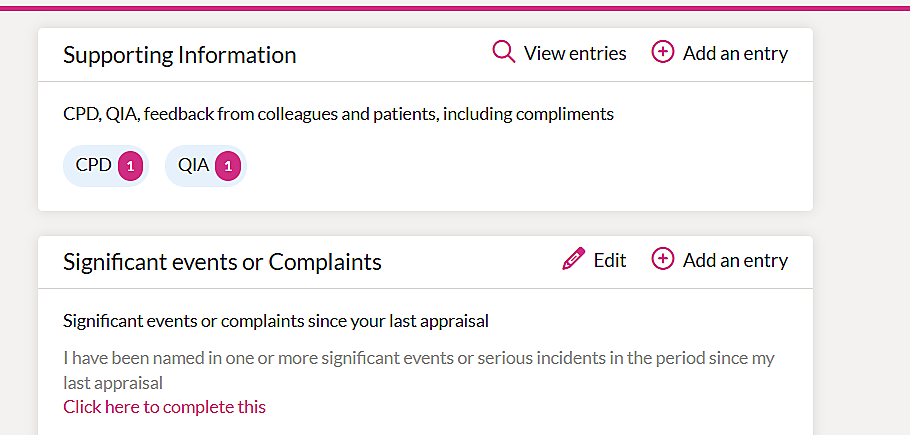
From your appraisal overview, find the Significant events or Complaints box and click to complete or edit the section.
2. Complete the declaration questions
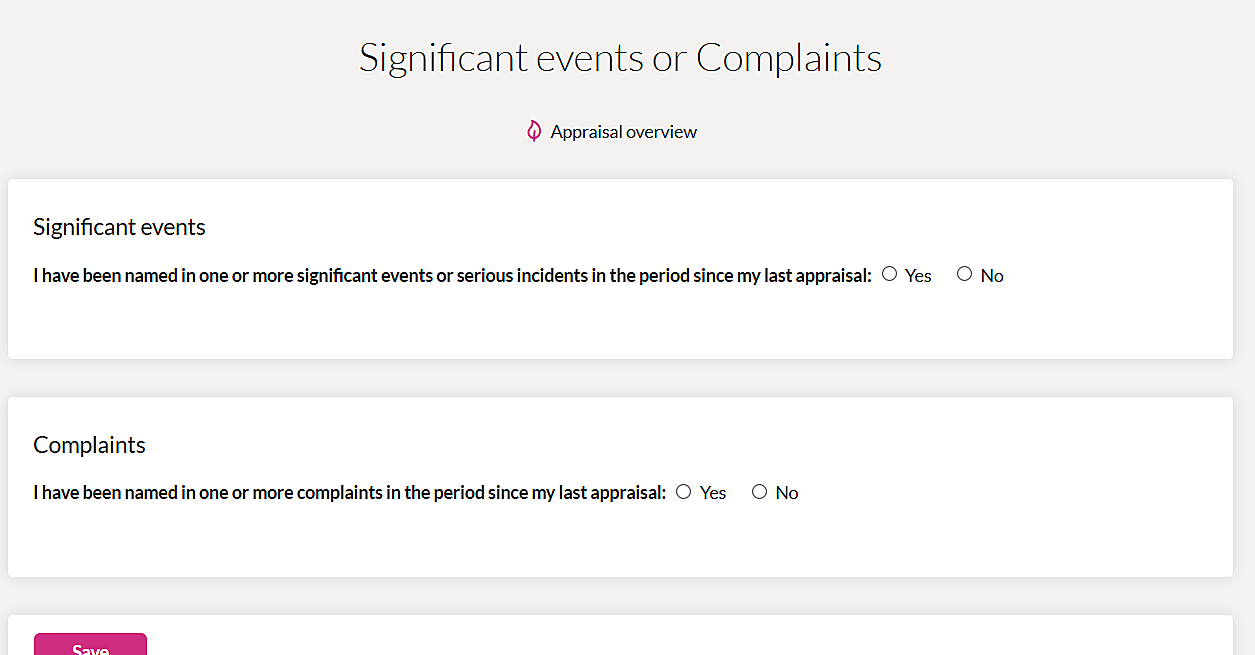
For each statement, select Yes if it applies to you or No if it does not. If you select Yes, save the section and FourteenFish will allow you to add the relevant event or complaint.
3. Add a new entry
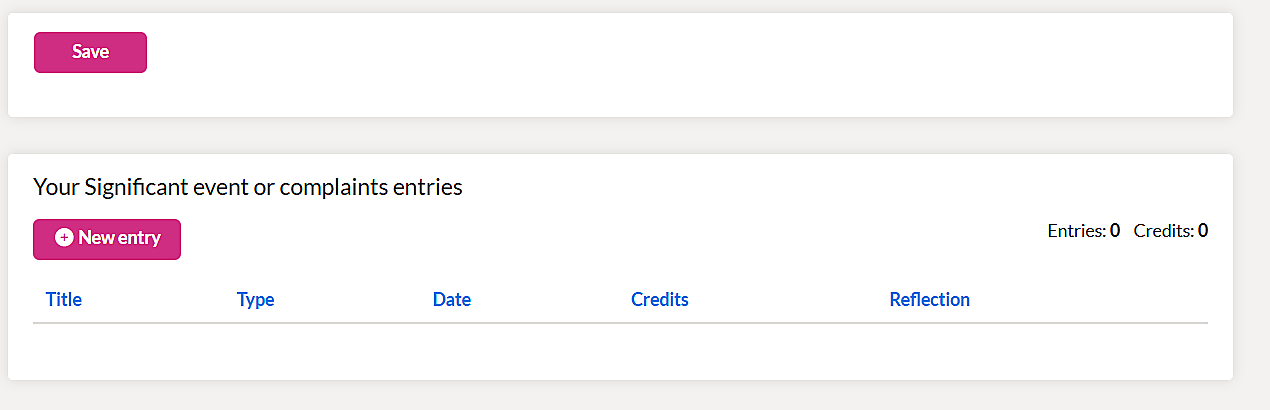

Click New entry in the entries section.
Choose whether you are adding a Significant event or a Complaint.
4. Complete the entry and reflection
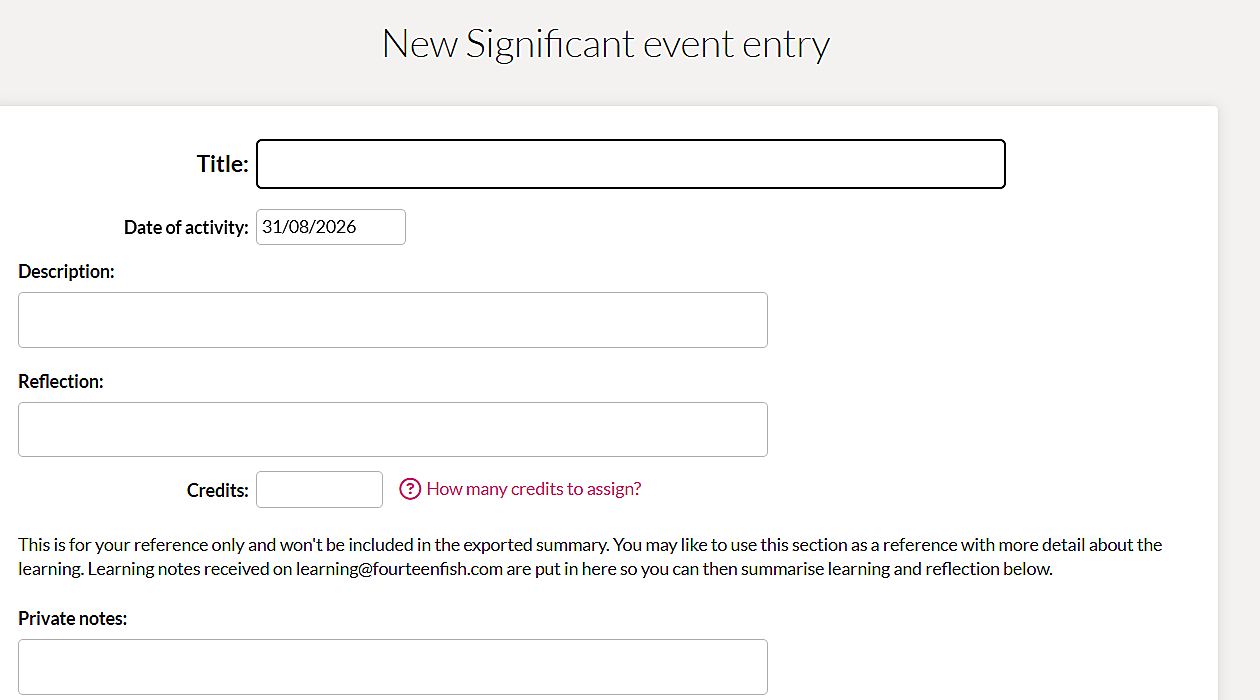
Add a clear title and date, then briefly describe what happened. Use the Reflection box to record your own involvement, what you learned and anything you would do differently or change in your future practice. Keep the entry focused on reflection rather than simply reproducing the incident or complaint correspondence.
Sources / Last Reviewed
Sources:
GMC – Guidance on Supporting Information for Revalidation
GMC – Compliments and Complaints
NHS England – Medical Appraisal Guide
NHS England – Medical Appraisal Policy
NHS England – Guidance on Responding to Concerns About Medical Practice
The GMC requires doctors to collect, reflect on and discuss relevant supporting information across their whole scope of practice, including significant events and formal complaints.
Last reviewed: August 2026