Visual how-to for documenting QIA in FourteenFish, with real anonymised appraisal examples
Part 1 - How to document QIA in FourteenFish
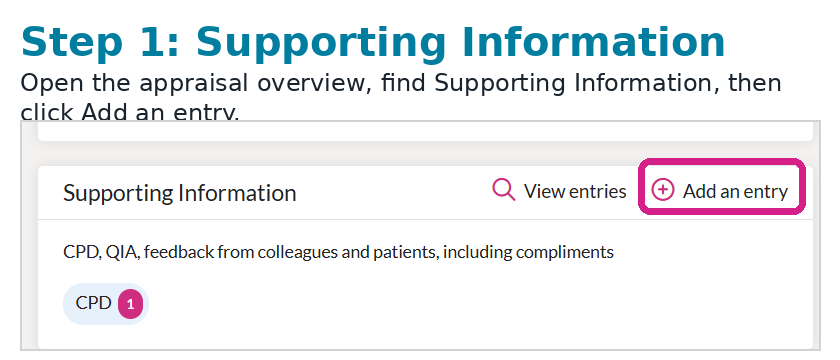
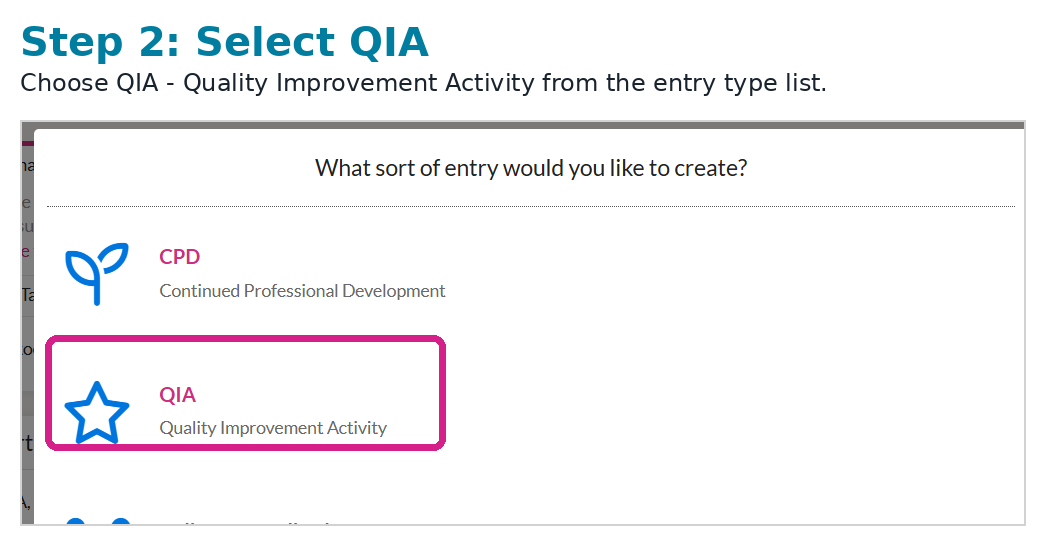
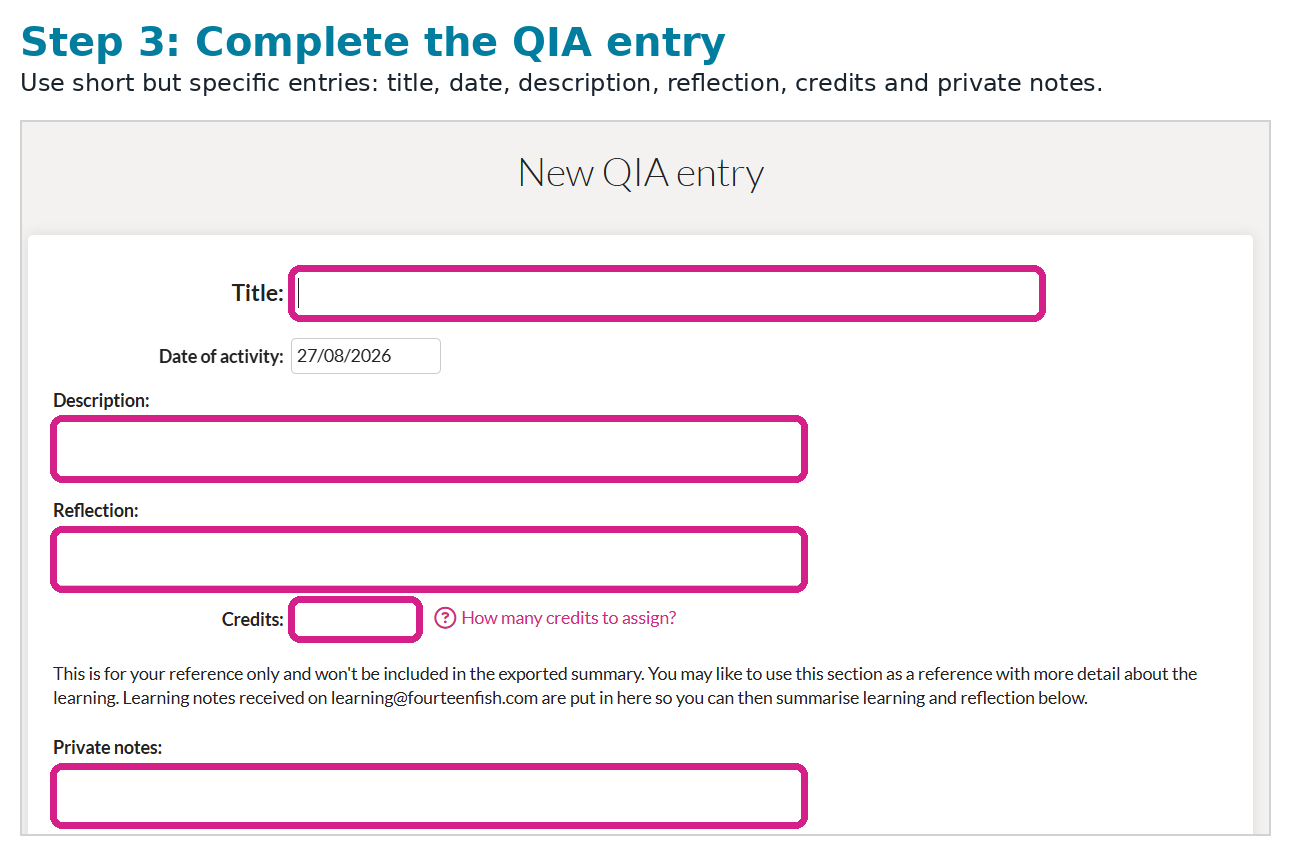
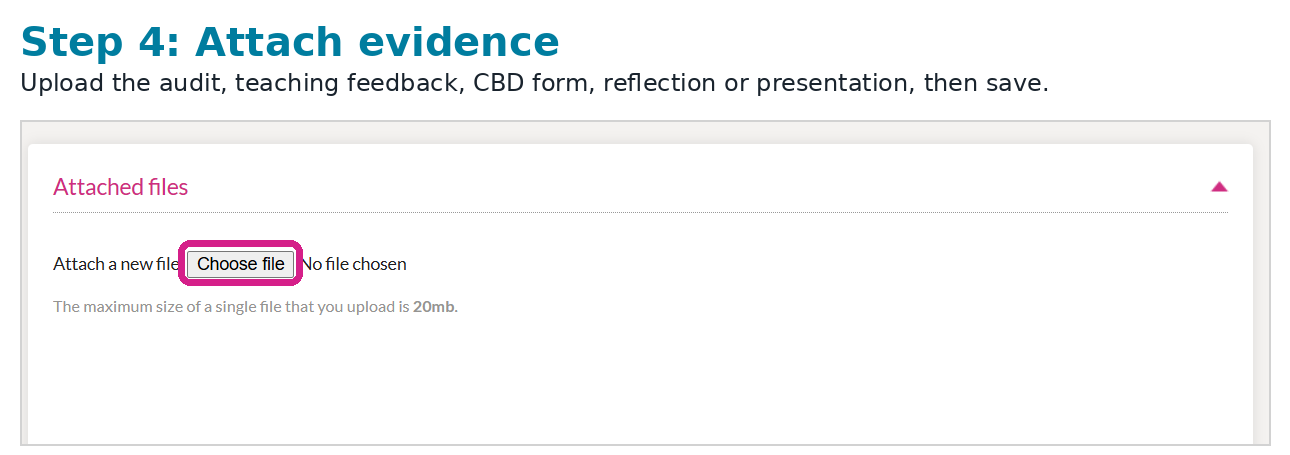
Use the QIA section for audits, quality-improvement projects, teaching with evaluation, case-based discussions, reflective service observations and other activities where practice is reviewed and learning is identified.
The key point is not just uploading evidence. The appraiser needs a short narrative that explains the activity, the learning and the next step.
Worked example to paste into FourteenFish
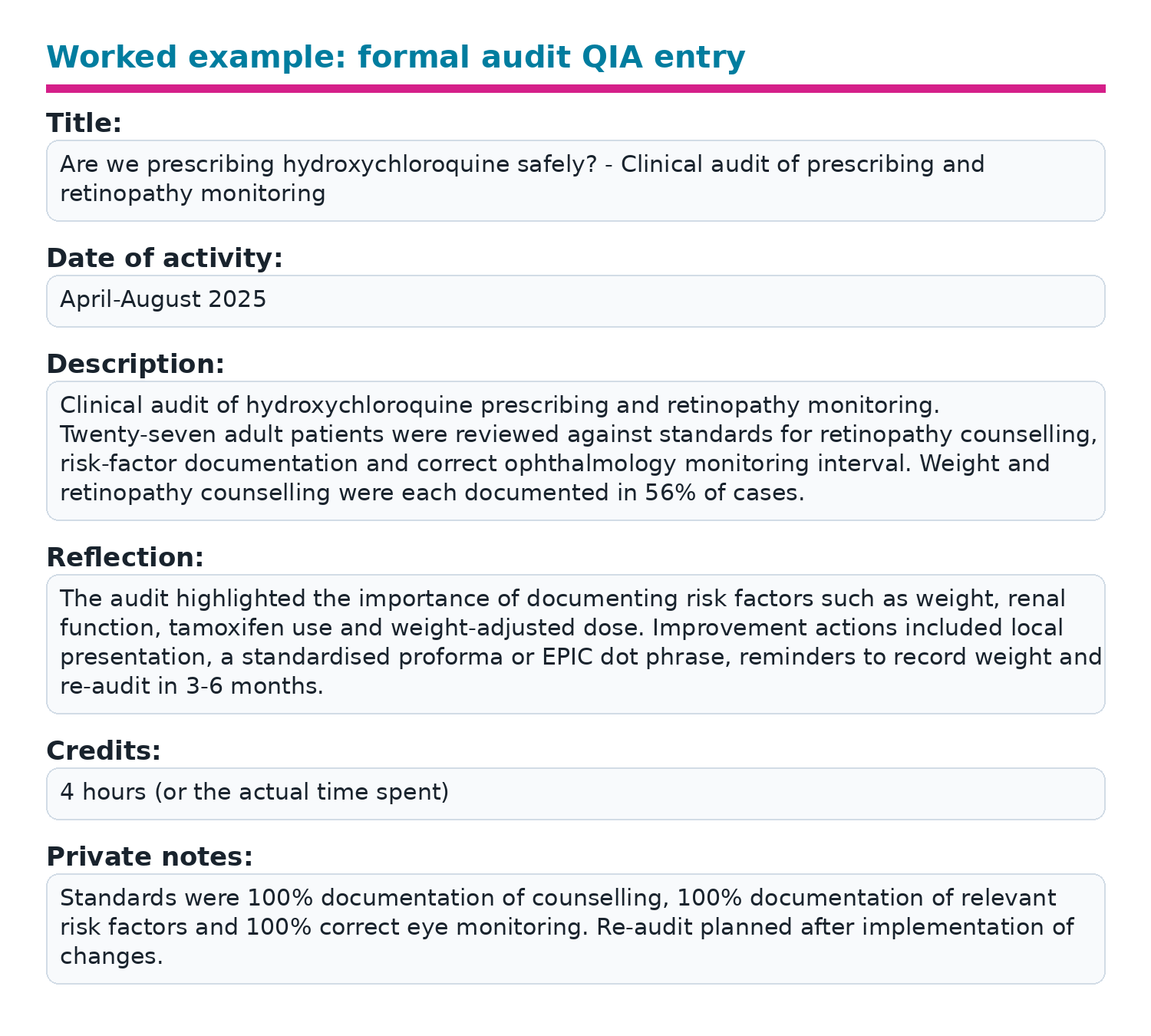
This example uses the formal hydroxychloroquine prescribing audit. Credits are entered as hours, so 4 credits means approximately 4 hours spent. Adjust this to the true time spent on the audit.
Part 2 - Real anonymised QIA examples
These examples are cropped directly from the uploaded appraisal evidence. Identifying details have been removed or omitted. They show the range of material that can support QIA: a formal audit, teaching evaluation, case-based discussion and reflective attachment evidence.
Example 1 - Teaching programme with feedback
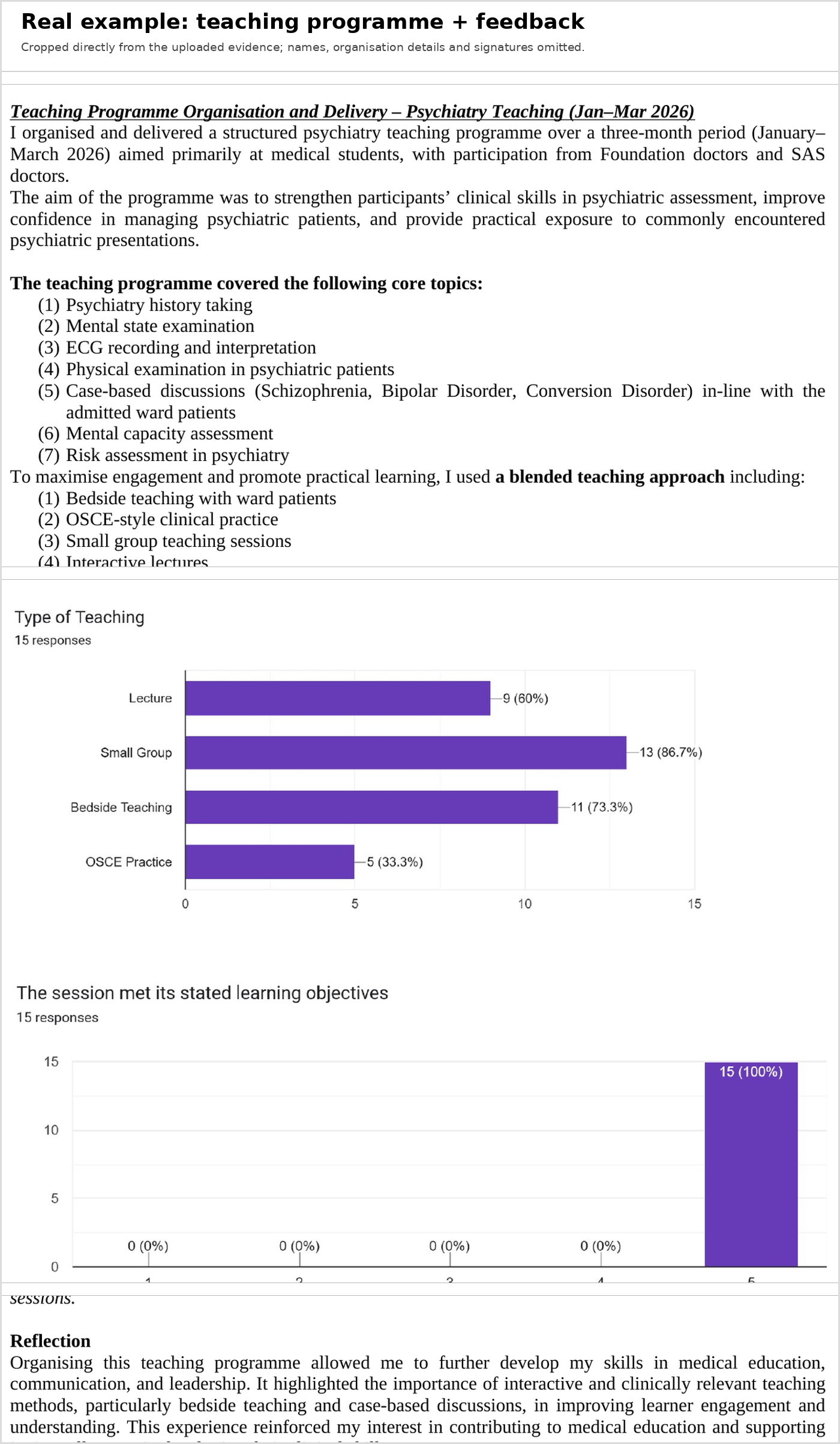
This is useful QIA evidence because the doctor did not simply say they had taught. The evidence shows a structured programme, learner feedback, evaluation and reflection. The strongest part is that feedback was collected and could be used to refine future teaching.
Example 2 - Formal prescribing audit
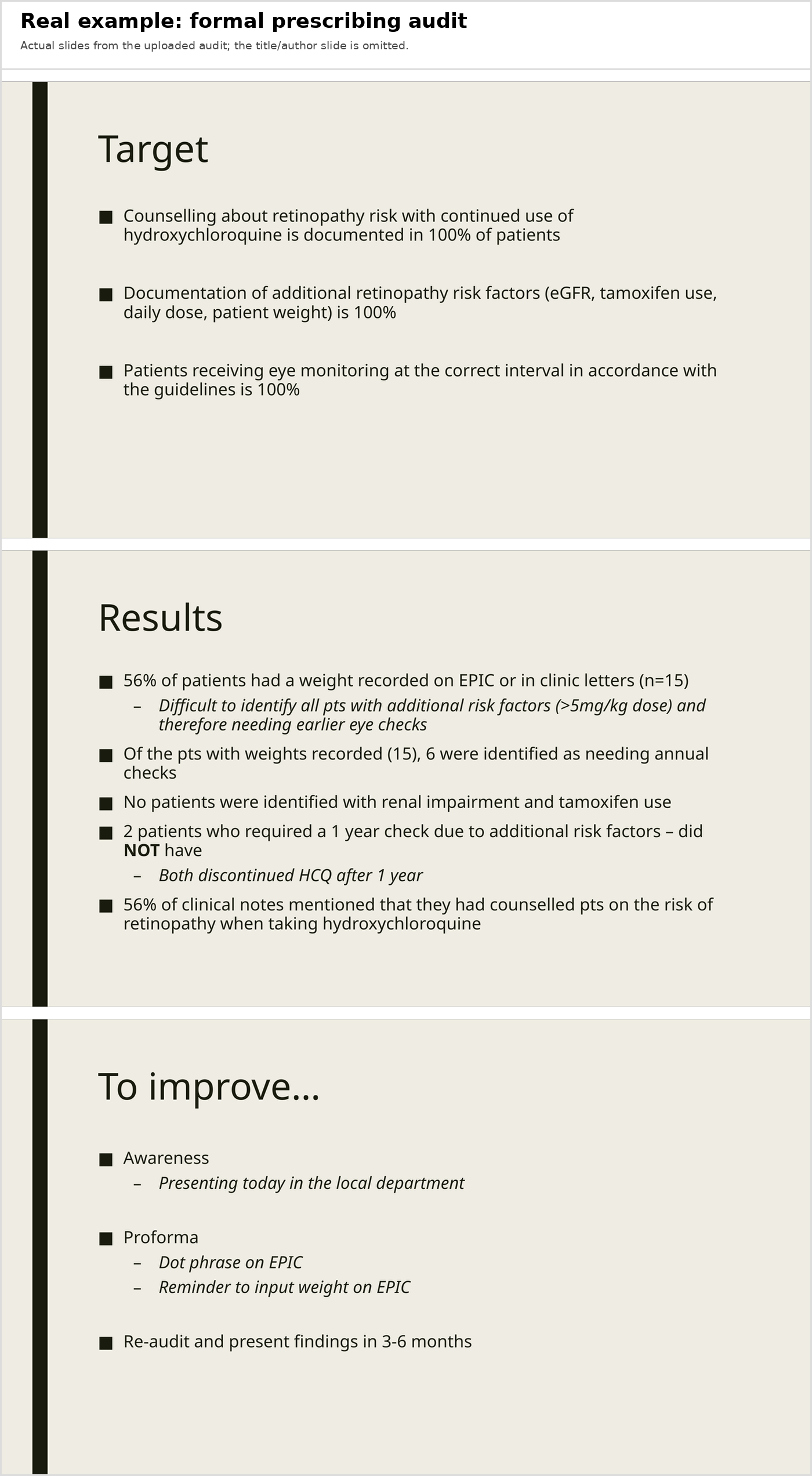
This is the clearest traditional QI cycle. It includes a standard, method, results, conclusion and improvement plan. The re-audit plan makes it stronger because it shows the intention to check whether the intervention worked.
Example 3 - Case-based discussion with reflection
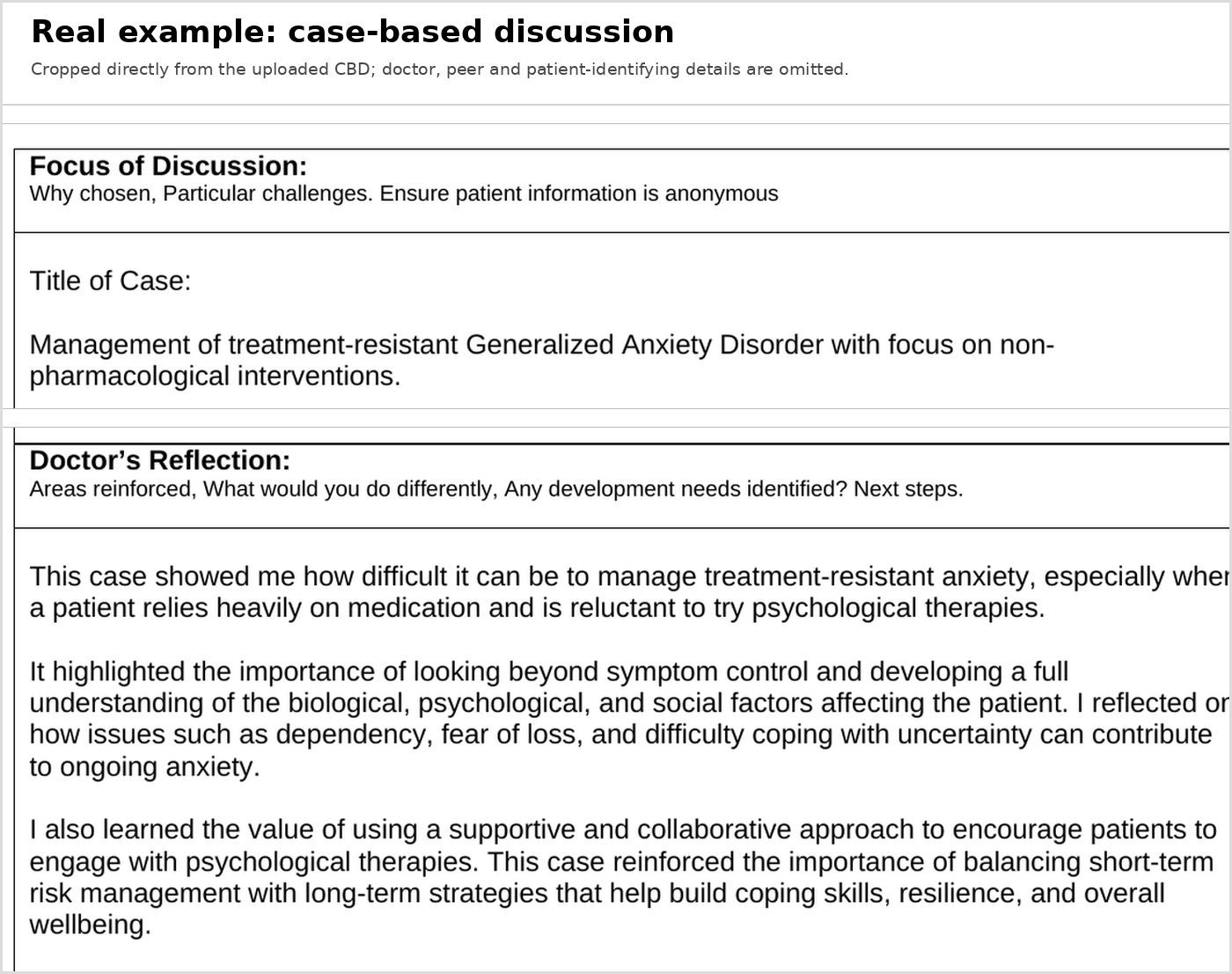
A CBD can work well as QIA where it reviews a real clinical challenge, includes feedback, and leads to learning or a change in future practice. This example is useful because the reflection goes beyond a description of the case and considers future management.
Example 4 - Clinical attachment / observational reflection
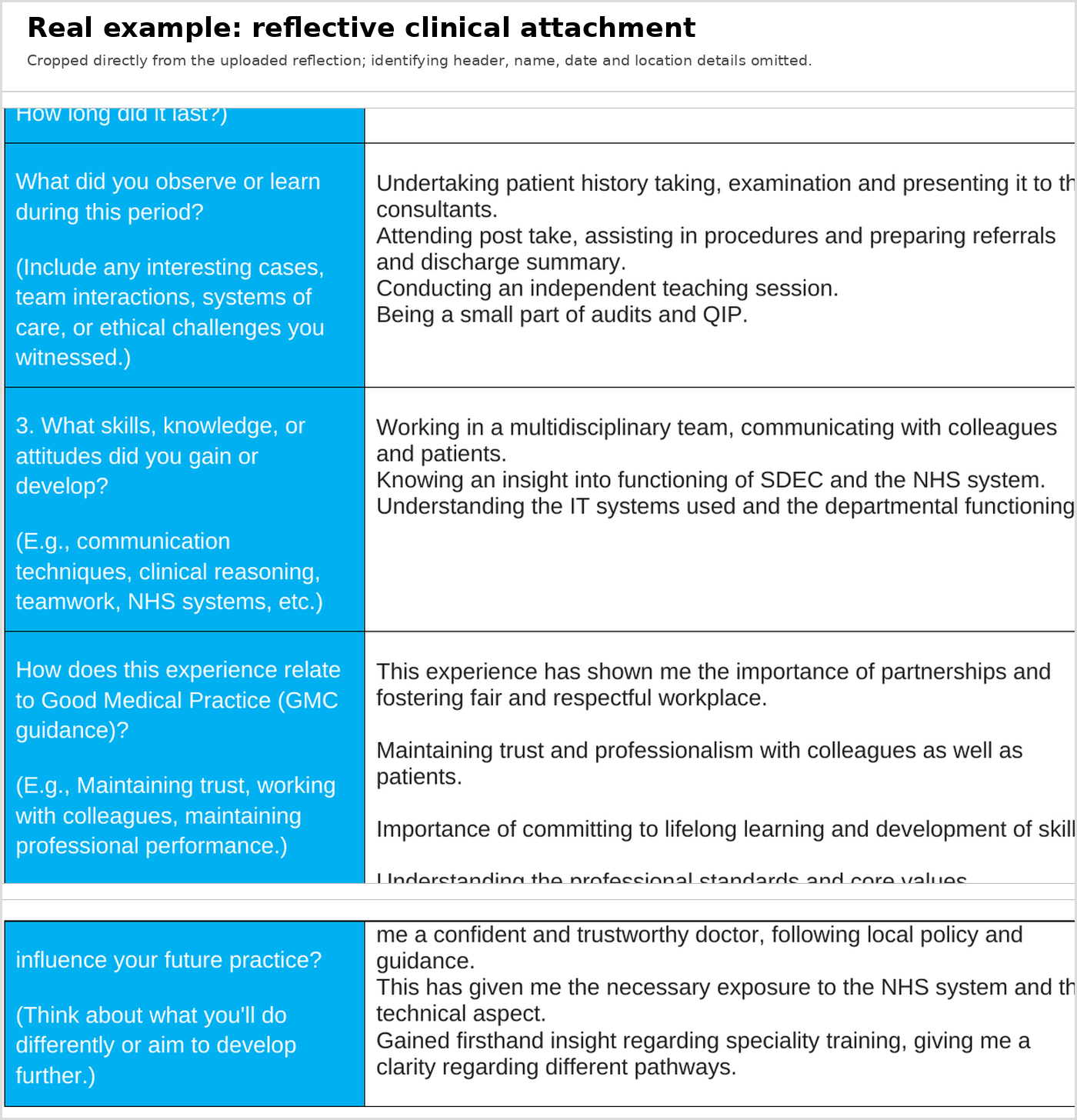
This is genuine supporting information and may be useful, especially for doctors new to UK practice.
What good QIA documentation shows
| Feature | What this means |
|---|---|
| What was done | The appraiser can see the actual activity, not just a vague sentence. |
| Evaluation | There is a result, feedback, peer discussion, audit finding or other review of practice. |
| Reflection | The doctor explains what they learned and why it matters. |
| Action or next step | There is an improvement plan, change in practice, re-audit or clearer plan for future work. |
Bottom line
A strong QIA entry makes the cycle visible: problem, activity, evaluation, reflection and next step. Audit, teaching feedback, CBDs and reflective observations can all support QIA if documented clearly.